
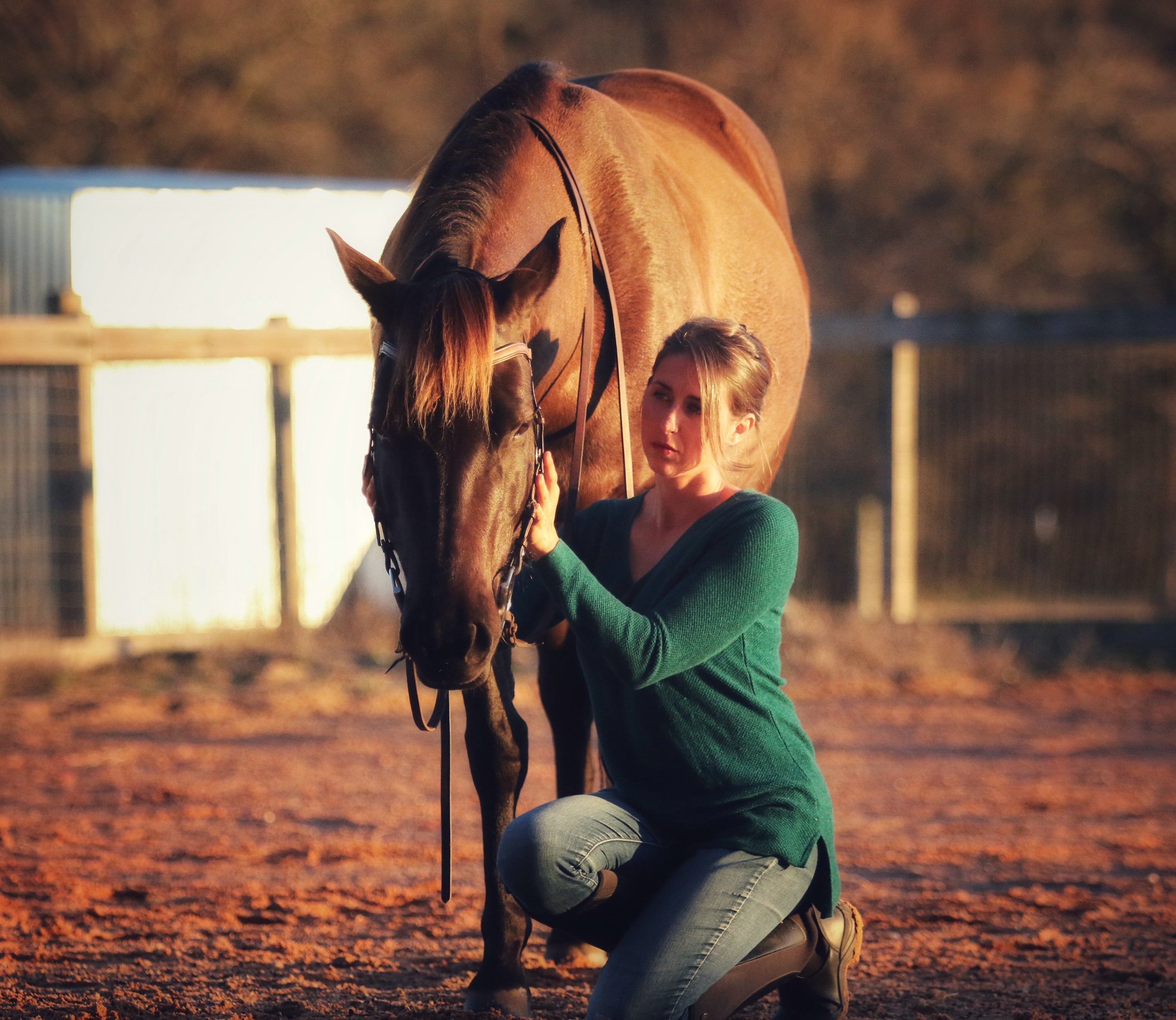
Integrated Training & Rehabilitation
Support healing. Develop resilience. Create lasting change.
Some horses leave the Wellness Intensive with a clearer plan and return home ready to continue their progress.
Others benefit from additional time to develop new movement patterns, rebuild strength, and support lasting change.
If your horse needs more time than a two-week intensive can provide, Integrated Training & Rehabilitation may be the next step.
Thoughtful Training. Whole-Horse Development
✳︎
Thoughtful Training. Whole-Horse Development ✳︎
Every meaningful change begins with understanding.
Before we can help a horse move differently, we first need to understand how they're moving now and why.
Understanding is the first step. Development is the journey.
Developing new movement patterns takes time.
Building strength takes repetition.
Helping the nervous system discover new possibilities takes consistency.
Lasting change happens when horses are given the opportunity to practice a different way of moving, learning, and living.
Integrated Training & Rehabilitation builds on the roadmap created during the Wellness Intensive, providing the time, consistency, and individualized support needed for horses to develop greater capacity for movement, learning, recovery, and long-term resilience.
Creating the Conditions for Change
Lasting rehabilitation isn't built on one intervention. It's the result of multiple systems working together.
Movement & Skill Development – Training and functional movement to improve coordination, strength, and body awareness.
Nervous System Support – Helping the horse find regulation, comfort, and neutral resting muscle tone through bodywork, somatic education, & attunement practices.
Physiological Support – Individualized nutrition guided by HTMA to support recovery, resilience, and adaptation.
Environment & Integration – Thoughtful management, appropriate recovery, and a low-stress environment that allow new skills and movement patterns to become lasting habits.
Structural Foundations – Evaluating hoof balance, dental health, saddle fit, and other structural considerations that influence long-term development.
Time to Learn, Time to Integrate
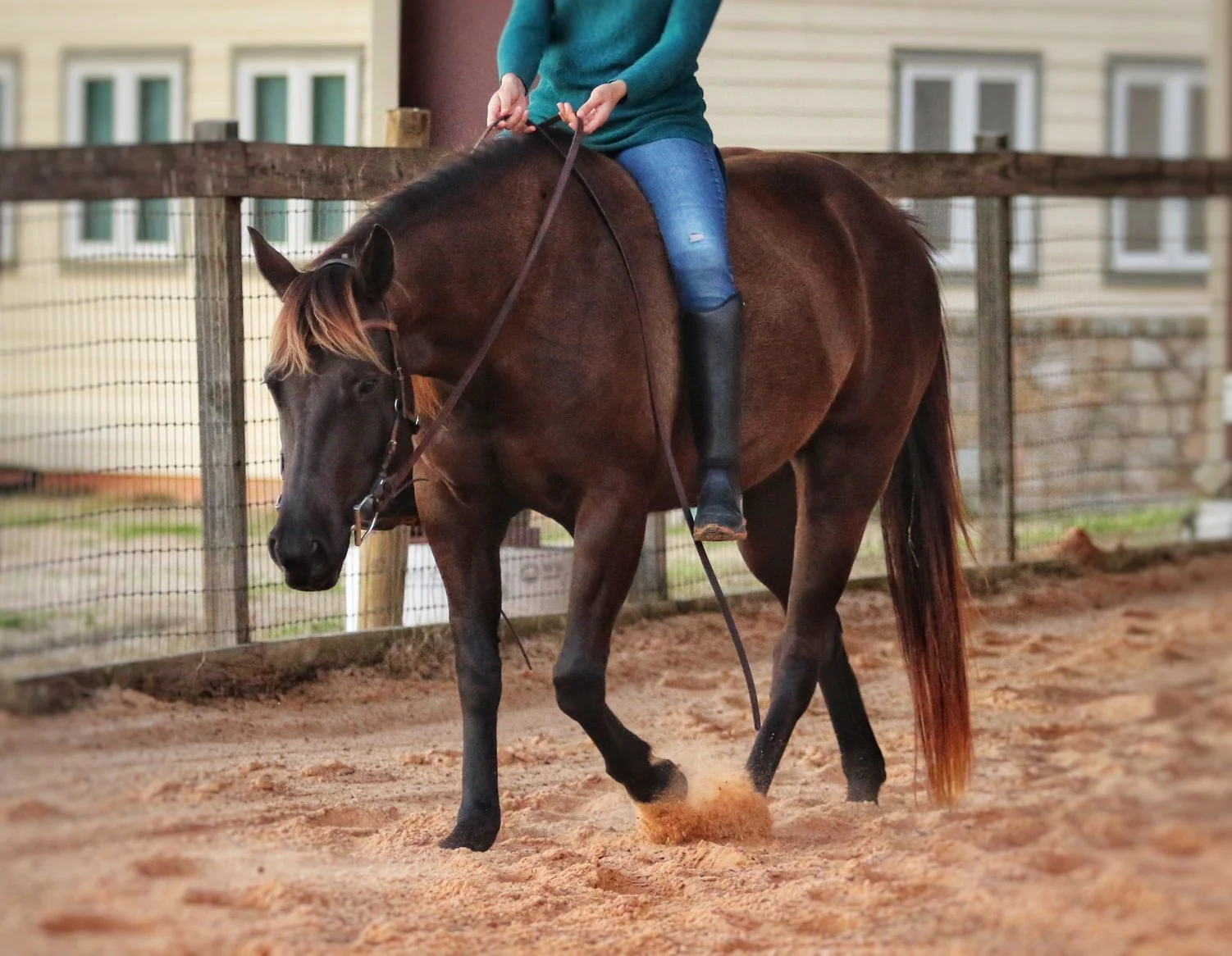
Horses in my programs typically participate in three to four sessions each week, rather than working every day.
Learning doesn't only happen during a training or movement session. Lasting change occurs as the nervous system processes new experiences and the body adapts between sessions. Purposeful rest gives horses time to recover, integrate what they've learned, and return to the next session ready to build on that foundation.
The exact number, type, and length of sessions are adjusted to each horse's needs. Sessions may range from approximately 30 minutes to two hours, depending on the horse's age, goals, physical condition, and the work we're doing together.
Outside of our sessions, your horse continues benefiting from thoughtful nutrition, a low-stress environment, and intentional daily management. Those foundations are supporting their physiology every hour of the day. My goal is to make each session meaningful while allowing those daily influences to reinforce and deepen the progress we're creating together.
Development isn't always created by more intensity. It's created by giving the horse the right experiences, at the right time, with enough space for those experiences to become part of who they are.
Supporting Rehabilitation from the Inside Out
When Is Integrated Training & Rehabilitation a Good Fit?
This program is designed for horses who would benefit from ongoing support and the time needed to create meaningful change.
It may be a good fit for horses who:
Have persistent movement or postural compensations.
Struggle with confidence, tension, or chronic bracing.
Have experienced injury.
Continue to experience challenges despite previous training or treatment.
Need time to rebuild strength, coordination, and body awareness.
Would benefit from a collaborative, whole-horse approach rather than focusing on a single symptom.
Every horse arrives with a different history.
My job is to understand where they are today and help them move forward.
Investment & Program Structure
Because every horse progresses at a different pace, this program is intentionally structured differently than a traditional monthly training program.
Rather than charging one flat monthly training fee, sessions are billed weekly based on the work completed. This allows each horse's schedule to reflect their individual needs, giving them appropriate time for recovery, integration, and learning without feeling pressured into a predetermined number of sessions.
Each week, you'll receive an invoice accompanied by session notes so you can follow your horse's progress throughout the program.
Monthly board, base nutrition, and the required HTMA consultation (one time fee) are billed and due at the beginning of each month.
Board: Private paddock with shelter and shared fence line $150
Base Nutrition: Coastal hay, forage pellets, fat source, mineral balancer, salt $200
HTMA & Initial Nutrition Consultation: $215 (one time fee)
Monthly Fixed Costs
Individual sessions: $60 each
Most horses participate in 3–4 sessions per week, depending on their needs.
Training Sessions
Individualized Nutritional Support
Every horse enrolled in the program receives an individualized nutrition plan based on their HTMA results.
Because no two horses have the same physiological needs, supplement recommendations will vary from horse to horse. To help owners make informed decisions, I provide Foundational, Preferred, and Optimal recommendations whenever possible, allowing you to choose an option that aligns with your budget and comfort level while still supporting your horse's progress.
Any supplements recommended beyond the base nutrition provided during the program are purchased separately by the owner.
-
Every horse is different.
Length of stay depends on your horse's history, goals, and rate of progress. During our initial consultation, we'll discuss what is realistic for your individual horse.
-
No.
Many horses enter this program because they are recovering from injury, returning to work, preparing for competition, or simply need time to improve movement quality and overall capacity.
-
No.
Integrated Training & Rehabilitation is designed to complement veterinary care and other professionals involved in your horse's health and performance.
-
Most horses participate in three to four structured sessions each week. Rather than focusing on maximizing the number, I focus on maximizing the quality of learning. Time between sessions allows horses to recover physically, process new information, and integrate changes in movement and nervous system regulation.
Every horse is different, so the schedule is adjusted based on age, fitness, temperament, goals, and how they're responding. Sessions typically last between 30 minutes and two hours.
Progress isn't created by training sessions alone. Nutrition, daily management, and a supportive environment continue influencing your horse around the clock and are just as important to long-term development
-
Every horse is unique, and so are the physiological factors influencing their recovery.
Two horses may present with similar movement patterns or behavioral challenges while requiring very different nutritional support. Without understanding what's happening internally, any recommendations I make would be based on generalizations rather than the individual horse.
Because long-term rehabilitation depends on supporting physiology, an individualized nutrition plan is an essential part of the program—not an optional add-on.
Frequently Asked Questions
Ready to Begin?
Some horses simply need more time, more understanding, and a different approach.
If your horse has been struggling physically, emotionally, or behaviorally, we'll work together to uncover what's contributing to those challenges and create a plan that supports lasting change.
Let's start by understanding the horse in front of us.
Service
Designed For
Young Horse DevelopmentHorses beginning their education.
Horses needing assessment, understanding, and a foundation for moving forward.
Wellness IntensiveHorses with an established history that are ready to continue developing through a whole-horse approach.
Integrated Training & RehabilitationHorses needing physiological support, whether as prevention or alongside other services.
Nutrition Support